Showing posts with label Rhode Island. Show all posts

Saturday, July 21, 2007

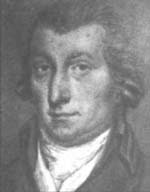
Major General John Sullivan (Quebec 1775)

John Sullivan
Major General John Sullivan (1740-95) was born in Somersworth, New Hampshire, the son of Irish immigrants. He practiced law and was reputedly so greedy and litigious that he was once attacked by a mob. Despite this, he became a major in the militia and was elected to both the First and Second Continental Congress, aligning himself with the radicals and welcoming a split with Great Britain.

In December 1774 he seized 100 barrels of powder from Fort William and Mary in Portsmouth, promised the Governor that his followers would disperse, and then promptly went back and took 60 muskets and 15 cannon. Seven months later, he was sent to Boston with the rank of brigadier general, but also remained active in politics, campaigning for a distinct government for New Hampshire. After the British evacuation, he was ordered to Canada with six regiments, but soon found himself in command of an army facing the twin scourges of smallpox and a superior enemy. Attempting to take the offensive, faulty intelligence led to the defeat at Trois Rivieres, after which he saw retreat as the only option. He withdrew to Crown Point, only to find that he had been replaced by Gates.

After complaining to Congress in person, Sullivan returned to take command on Long Island, only to be superseded again - this time by Putnam - and then captured at Brooklyn. He was exchanged in September for Richard Prescott, served under Washington in the New Jersey and Pennsylvania campaigns, and commanded at Rhode Island (1778) and against the Iroquois (1779). Illness contracted during the latter campaign forced him to resign his commission and enter Congress. He chaired the inquiry into the 1781 mutinies, and later became governor of New Hampshire and a federal judge.

Friday, July 20, 2007

Brigadier General Benedict Arnold (Quebec 1775)

Benedict Arnold
Brigadier General Benedict Arnold (1741-1801) was born in Norwich, Connecticut, the great-grandson of a governor of Rhode Island. As a young man, he courted physical danger and personality clashes, and was regarded by his peers as a natural leader. Apprenticed to a local apothecary, he soon set up his own business and later became a smuggler. As the political rift with Great Britain grew, these interests led him to oppose restrictions on trade, and he became a natural ally of the radicals.

By 1774, Arnold was a wealthy merchant, an accomplished sailor, and captain of the second company of the Connecticut Governor's Foot Guards. Within 24 hours of hearing of events at Lexington, he seized the New Haven powder magazine - upsetting a French and Indian War veteran named David Wooster in the process - and marched to Boston. Proposing the seizure of Fort Ticonderoga and its much-needed artillery and supplies, he was given a commission by Massachusetts, which was later rescinded, much to his annoyance. In June, the death of his wife forced him to return to New Haven, where he was laid low by an attack of gout. He then received a third blow when the Massachusetts Congress refused to pay most of the expenses he claimed to have incurred in its service.

In September, General George Washington persuaded him to command one of the expeditions into Canada. The march to Quebec and the attack on the city illustrated his dynamic leadership, but the legal problems that followed his period as governor of Montreal showed another side to his character (as would a similar post in Philadelphia after the Saratoga campaign). He became embroiled in a court-martial instigated by Brown, Easton, and Hazen following the mysterious loss of supplies Arnold had seized from local merchants and sent to St Johns. When the court refused to hear one of his witnesses, Arnold challenged the members to a duel and only the intervention of Gates prevented further unpleasantness.

Arnold was a complex character: the creation of the Lake Champlain fleet showed his immense dynamism, the attack on Quebec his bravery (both traits that would surface again at Saratoga). However, avarice and "creative" accounting skills led to controversy throughout his Continental service, and also after the war, while his sensitivity to personal slights - real or imagined - contributed as much to his decision to change sides as his flirtations with the Loyalists in Philadelphia.