Showing posts with label Fort Ticonderoga. Show all posts

Friday, July 20, 2007

Brigadier General Benedict Arnold (Quebec 1775)

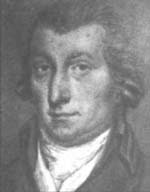
Benedict Arnold
Brigadier General Benedict Arnold (1741-1801) was born in Norwich, Connecticut, the great-grandson of a governor of Rhode Island. As a young man, he courted physical danger and personality clashes, and was regarded by his peers as a natural leader. Apprenticed to a local apothecary, he soon set up his own business and later became a smuggler. As the political rift with Great Britain grew, these interests led him to oppose restrictions on trade, and he became a natural ally of the radicals.

By 1774, Arnold was a wealthy merchant, an accomplished sailor, and captain of the second company of the Connecticut Governor's Foot Guards. Within 24 hours of hearing of events at Lexington, he seized the New Haven powder magazine - upsetting a French and Indian War veteran named David Wooster in the process - and marched to Boston. Proposing the seizure of Fort Ticonderoga and its much-needed artillery and supplies, he was given a commission by Massachusetts, which was later rescinded, much to his annoyance. In June, the death of his wife forced him to return to New Haven, where he was laid low by an attack of gout. He then received a third blow when the Massachusetts Congress refused to pay most of the expenses he claimed to have incurred in its service.

In September, General George Washington persuaded him to command one of the expeditions into Canada. The march to Quebec and the attack on the city illustrated his dynamic leadership, but the legal problems that followed his period as governor of Montreal showed another side to his character (as would a similar post in Philadelphia after the Saratoga campaign). He became embroiled in a court-martial instigated by Brown, Easton, and Hazen following the mysterious loss of supplies Arnold had seized from local merchants and sent to St Johns. When the court refused to hear one of his witnesses, Arnold challenged the members to a duel and only the intervention of Gates prevented further unpleasantness.

Arnold was a complex character: the creation of the Lake Champlain fleet showed his immense dynamism, the attack on Quebec his bravery (both traits that would surface again at Saratoga). However, avarice and "creative" accounting skills led to controversy throughout his Continental service, and also after the war, while his sensitivity to personal slights - real or imagined - contributed as much to his decision to change sides as his flirtations with the Loyalists in Philadelphia.

Wednesday, July 18, 2007

Lieutenant-Colonel Allan MacLean (Quebec 1775)

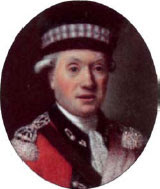
Lieutenant-Colonel Allan MacLean
Lieutenant-Colonel Allan MacLean (1725-83) was born at Torloish in Scotland, and began his military service as a 17-year-old lieutenant in the Scots Brigade of the Dutch Army. Accounts differ as to which side he fought on in the Jacobite Rebellion of 1745, but he later transferred to the British Army, was commissioned in the 60th Foot (serving briefly as adjutant), and was badly wounded at the sieges of Ticonderoga and Fort Niagara. He served as a captain under Wolfe at the capture of Quebec (possibly in Montgomery's Highlanders), and later took command of a New York Independent Company. On the death of his wife in 1760, he returned to Scotland to care for his three daughters, and to raise the short-lived MacLean's Highlanders (114th Foot).

By 1775, MacLean was back in North America and was authorized by Gage to raise a regiment from Scottish communities in Canada, New York and the Carolinas. During Montgomery's invasion, he made two attempts to relieve St Johns, but was forced to return to Quebec, where he helped to stiffen the resolve of the civil population until Carleton's return from Montreal.

After 1776, MacLean held several administrative posts and in June 1777, he was made a brigadier-general and governor of Montreal. He also spent some time at Fort Niagara. MacLean served Carleton well in 1775 and had other subordinates been as industrious and aggressive, Montgomery may well have been stopped at St Johns.

Friday, July 13, 2007

The beginning of the war in Canada (Quebec 1775)

Since the beginning of 1775, the commander at Ticonderoga, Captain William Delaplace of the 26th Foot, had been reporting suspicious activity around the post to Lieutenant-General Thomas Gage, the British commander in chief in North America. As the situation worsened, Gage warned Delaplace that a surprise attack might be imminent, although how Delaplace could have made the run-down post more secure with just two officers, 46 enlisted men (mostly old and worn out), and 24 wives and children, is unclear.

On 19 April 1775, after several near misses, hostilities did indeed break out between the King's troops and local militia, resulting in bloodshed at Lexington, Concord, and all the way back to Boston. The following day, an unofficial "army" of 20,000 militia had surrounded Boston, with more on the way - among them one Benedict Arnold. Arriving at Cambridge, Arnold persuaded the Massachusetts Provincial Congress to commission him as a colonel and authorize him to raise 500 troops to attack Ticonderoga. Leaving the mundane task of recruiting to others, he hastened north.

Ethan Allen, commander of the Green Mountain Boys, had been equally excited by the events at Boston and also decided to attack Ticonderoga. On 7 May he gathered 200 men at Castleton and arranged for boats to be brought to Hands Cove, just across the lake from the fort. As he was leaving Castleton, Arnold arrived and showed Allen his Massachusetts commission; Allen (or rather his men) refused to acknowledge it and, with the worst possible grace, the two agreed to march on the fort together. On the night of 9 May they arrived at Hands Cove, but the crossing was a shambles: only two boats could be found, and it was almost 3.00am before 83 men — all that could be carried at one time - crossed to the west side of the lake. Surprising a dozing sentry, whose musket misfired, Allen and his troops surged into the fort. Captain Delaplace and his colleague, Lieutenant Jocelyn Feltham, were roused unceremoniously from their quarters, and herded onto the parade ground with their men, whereupon Allen's troops found the rum store and proceeded to get drunk.

As more Green Mountain Boys crossed the lake, Allen sent a detachment of 100 men, under Seth Warner and Remember Baker (cousin to both men), to seize Crown Point. The sergeant and ten men living there were merely glorified caretakers and put up no resistance. At the same time, 30 more men under Captain Samuel Herrick were marching to Skenesboro (now Whitehall), the seat of a prominent Loyalist, Philip Skene. Herrick found Skene's schooner, Katherine,' renamed it Liberty and delivered it to Ticonderoga on 14 May.

Meanwhile, Arnold had learned that the British post at St Johns, at the head of the lake, was not only unguarded, but was also home to a 16-gun sloop packed with stores. Aware that such a mission would violate the New York-Quebec frontier, and that a column of Regulars was coming from Montreal to reinforce the garrison, Arnold took over Liberty, and set off up Lake Champlain. Soon after dawn on 17 May, he captured the fort, its 14-man garrison, and the sloop George III (which he renamed Enterprise), destroyed some boats and stores, and returned south. On the way, he met Allen and 100 of his men, who had rowed up the lake in two bateaux.

Against Arnold's advice, Allen intended to occupy the fort and ambush the relief column coming from Chambly. He later thought better of it and withdrew to the opposite side of the river; the next morning he awoke to find 200 Regulars and two small cannon facing him from the west bank. He put his men back into the boats and had soon rowed out of range, but only after losing three men.

By the end of May, Massachusetts and Connecticut had agreed that the latter would look after the defense of the Lake Champlain corridor. Unfortunately, nobody told Arnold and on learning that his Massachusetts commission was now defunct, he took Liberty and Enterprise out into the middle of the lake. When a committee rowed out to reason with him, his crew fixed bayonets and prevented them coming aboard. Finally, they persuaded Arnold to give up the vessels, but this was just the first of a number of clashes between Arnold and his political and military masters.

Thursday, July 12, 2007

The thirteen colonies of Canada (Quebec 1775)

Having spent considerable sums of money - and blood - defending its North American colonies from the French and their Indian allies, Great Britain felt justified in asking for some measure of repayment from the colonists. Powerful though the issue of taxation was, it merely brought to a head a much deeper division that had existed almost from the foundation of the colonies by people fleeing religious, political or social restrictions in Europe. And when the French departed, so too did the only reason for reliance on Great Britain - defense.

Against this background of political unrest, rumors circulated throughout North America of a Bill that would recognize the alien nature of the former New France. Canadians wanted their language, laws and religion recognized, and access to civil and military posts in their own country. The first two British governors - Major-General James Murray, and Major-General Guy Carleton - believed that the future of Quebec as a British colony had to be based on tolerance, and lobbied London accordingly. The only opposition came from a small but vociferous group of English-speaking immigrants, who had assumed that they would be given preference over the defeated Papists.

In 1774, Parliament passed the Quebec Act, which accepted the Catholic religion (modifying the oath, so that Catholics could hold public office), and confirmed the use of French law and custom. It also redrew the boundaries of the Province, effectively ending any westward expansion by the American colonies - particularly New York, Pennsylvania and Virginia - and lucrative land speculation by men like George Washington, Patrick Henry, and Israel Putnam. Despite being probably the most farsighted piece of legislation enacted by a British government in North America, it was widely attacked by Americans - by now paranoid about their own "liberty" - who saw no irony in denying majority rule to the Canadians.

The First Continental Congress saw Canadians as potential allies, but was also aware of their hostility toward Americans. It determined to extend the hand of friendship (the Province's commercial and agricultural assets were no doubt also a factor) and in a long-winded letter agreed on 26 October 1774, invited Canadians to put aside religious differences and establish "a hearty amity." The letter also carried a threat, reminding Canadians they were "a small people compared to those who with open arms invite you into fellowship." At the same time, John Jay, with the knowledge of Congress, was circulating a pamphlet in North America and Great Britain alleging that the King was organizing a Canadian Catholic army to lay waste the colonies and possibly even Great Britain and Ireland as well.

The Massachusetts Committee of Correspondence dispatched an agent, John Brown, to invite American merchants in Montreal and Quebec to send delegates to Philadelphia and join in plans for rebellion. On his way, Brown looked in at Fort Ticonderoga, the former French strong point at the junction of Lake Champlain and Lake George that guarded the main trade route from New York and New England into Canada. He advised his masters that the post "must be seized [sic] as soon as possible should hostilities be committed by the King's troops," and recommended a local group of vigilantes known as the Green Mountain Boys for the task.